[Eop]
Showing posts with label current source. Show all posts
Sunday, May 30, 2021
Monday, August 26, 2019
Another LTSpice Bug
curiously the bug is identical as in the LTspiceIV v. 4.23l as also in the LTspiceXVII v. XVII
Late update : a Yahoo group discussion log - copy -- basically it turned out to be an exceptional.. (in practice but) trivial (by functionality described in "documentation" ← if there is such) ..behaviour of the LTSpice simulation engine . . . where the simulator can't decide whether there is any activity in circuit (although it is obvious for human that there is . . . insane -- but there are even more stupid "computer bugs" in IT -- it's just "another one such" . . .)
in images ::
[Eop]
Late update : a Yahoo group discussion log - copy -- basically it turned out to be an exceptional.. (in practice but) trivial (by functionality described in "documentation" ← if there is such) ..behaviour of the LTSpice simulation engine . . . where the simulator can't decide whether there is any activity in circuit (although it is obvious for human that there is . . . insane -- but there are even more stupid "computer bugs" in IT -- it's just "another one such" . . .)
in images ::
[Eop]
Tuesday, December 26, 2017
Tuesday, November 3, 2015
Couple of new CCS tested
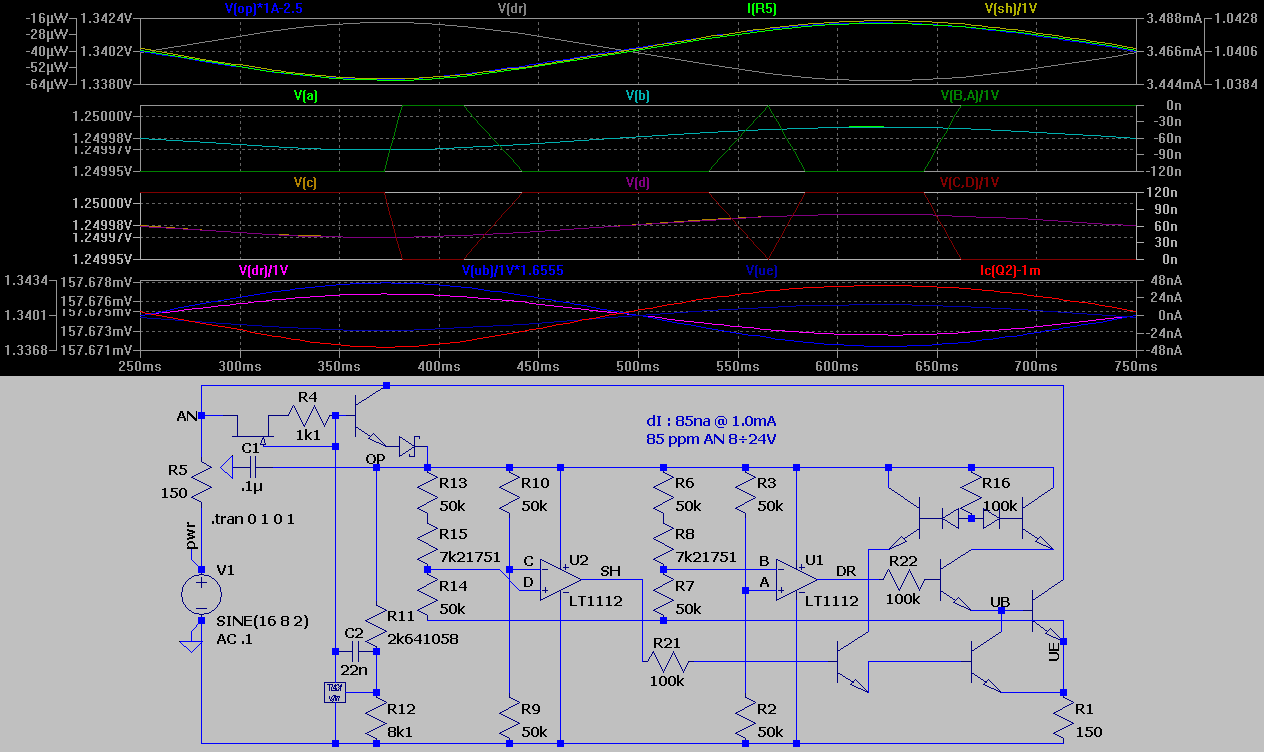
b) the LT1112 reads " ... Picoamp Input" ((i wonder what they mean by that)) anyway it's used here (not as initially planned)
a) almost no change to something already multiple tested but still new
a) compared with oldies ::
[EoP]
a) almost no change to something already multiple tested but still new
a) compared with oldies ::
[EoP]
Thursday, March 5, 2015
Friday, January 24, 2014
Non real world Constant current sources Comparison
NB! :: the brought circuits are not tested in reality -- they only represent a technical hint to a "What such grids may behave like" -- they are modifications from std. current source cirquits
the long story short -- THE TEST ::
here's no intentional temperature compensation = in real there is likely a significant difference to these plots
note:: the last shown (the lowermost fig. , right) is actually been built but tested near-around-below of it's 5V range (not entirely) -- however it worked better after replacing the HiFq-LoPwr transistors of the shown "zener" with MedLoFq-LoPwr 1-s (that is lowering the "starting point" of a zener - with expense of it's precision x (overall) range loss) -- which however improved the current source in low voltage range
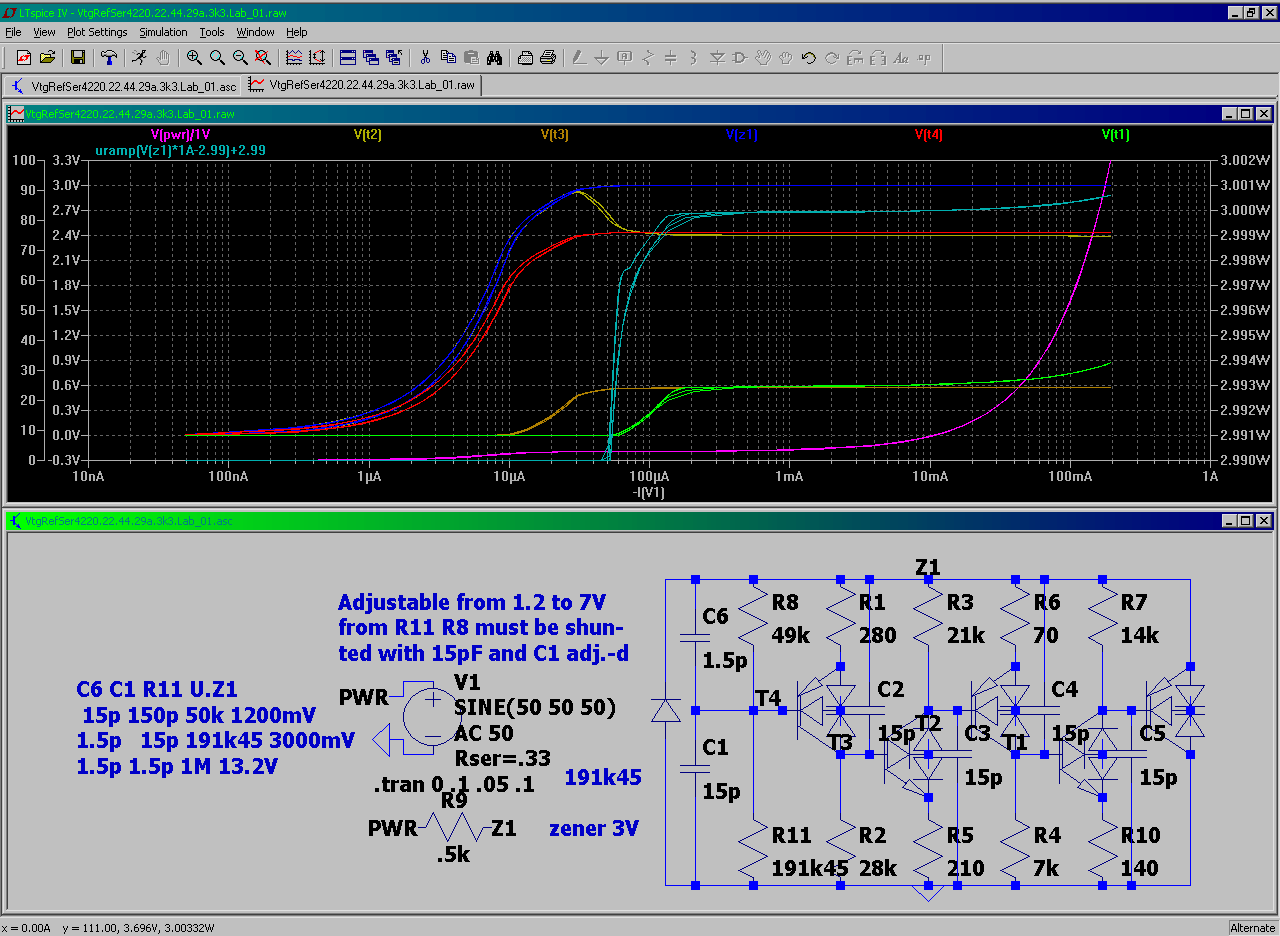
by that i reworked my "zener" concept - finding the following being (/!\) most likely the best (/!\) to use
however this one has a "startup ramp" ...
... i won't show here the "zeners" without "startup ramp" -- coz the're not tested in real
NB! this "zener" HAS a "startup ramp" (remove the capacitors -- and it nastily shows out)
the long story short -- THE TEST ::
here's no intentional temperature compensation = in real there is likely a significant difference to these plots
note:: the last shown (the lowermost fig. , right) is actually been built but tested near-around-below of it's 5V range (not entirely) -- however it worked better after replacing the HiFq-LoPwr transistors of the shown "zener" with MedLoFq-LoPwr 1-s (that is lowering the "starting point" of a zener - with expense of it's precision x (overall) range loss) -- which however improved the current source in low voltage range
by that i reworked my "zener" concept - finding the following being (/!\) most likely the best (/!\) to use
however this one has a "startup ramp" ...
... i won't show here the "zeners" without "startup ramp" -- coz the're not tested in real
NB! this "zener" HAS a "startup ramp" (remove the capacitors -- and it nastily shows out)